
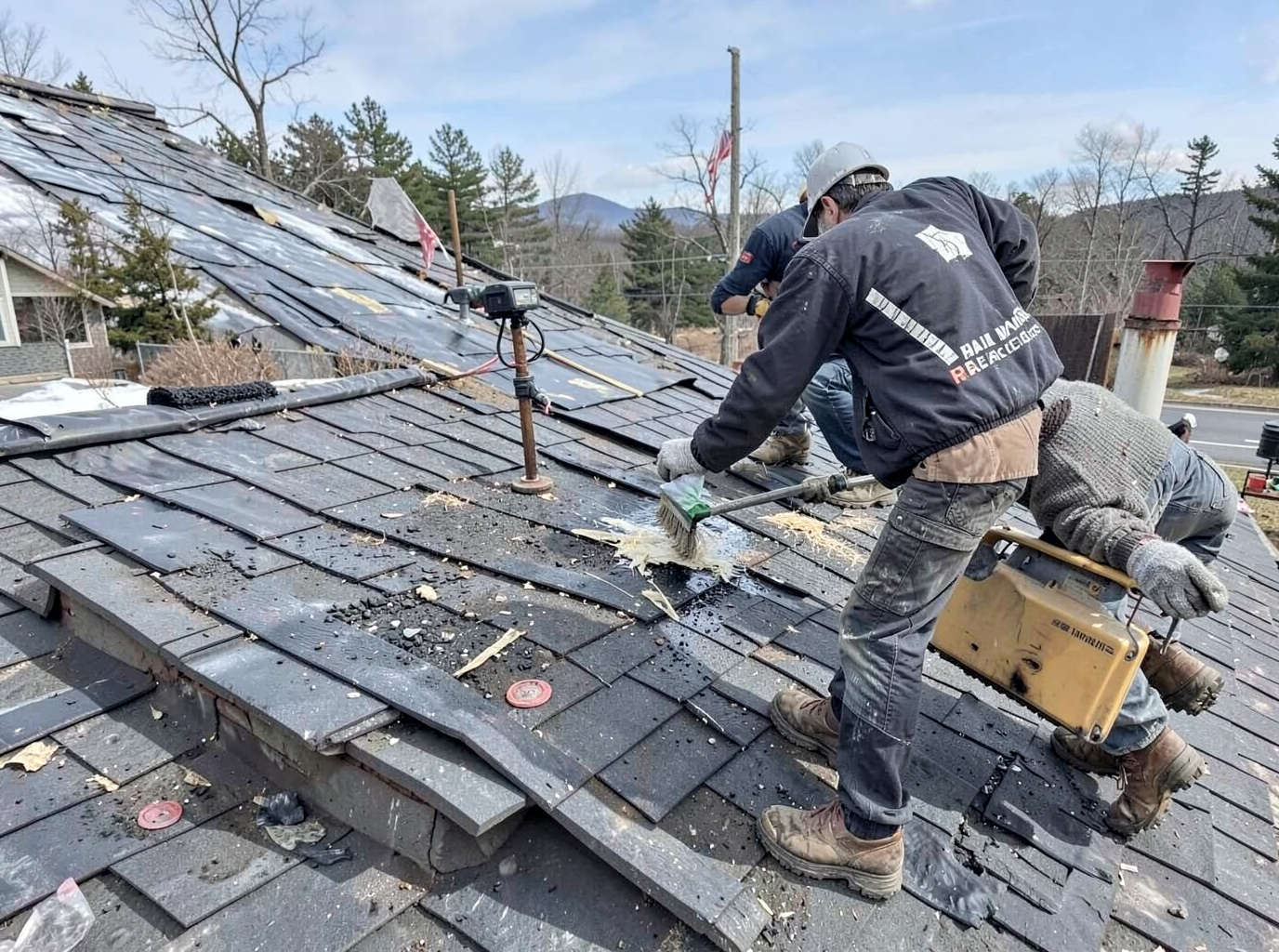
Great Falls roofs face repeated hail from summer thunderstorms that move across the Missouri River valley. Older asphalt shingle homes in Black Eagle and West Great Falls often show granule loss and cracked tabs that allow water entry once winter temperatures drop below freezing. Metal roofs near Giant Springs can dent without leaking immediately, but the impact weakens seams that later fail during spring runoff. Local contractors check for hidden damage under the surface because hail rarely hits uniformly across a roof plane.
Cascade County building practices favor steeper pitches on homes built before 1980, which changes how hail strikes and how crews stage repairs. Access in Downtown Great Falls is limited by narrow alleys and overhead lines, so material staging must happen from the street side. Warm dry summers help drying time after underlayment replacement, yet sudden August storms can interrupt work and require temporary tarping that stays in place through early snow. Proper step flashing around chimneys and skylights prevents ice dams that form when meltwater refreezes overnight.
Insurance claims in Great Falls require photos taken from multiple angles before any material is removed. Hail damage often appears alongside wind damage from the same storm cell that tracks toward Helena or Billings, so documentation must separate the two causes. Replacement sections must match existing shingle profiles exactly or the entire slope may need redoing to satisfy manufacturer warranties. Crews working in Black Eagle routinely find previous repairs that used mismatched underlayment, creating weak points that new hail exploits.
Terrain around the C.M. Russell Museum area includes older homes with limited attic access, making interior leak detection slower. Crews carry extra sealant for cold-weather application because standard caulks fail when temperatures swing from daytime highs in the 80s to overnight lows near freezing. Every repair includes checking ridge vent integrity because hail can crack plastic vents that then allow snow infiltration during winter.
Technician insight
In Great Falls the thing that catches most people out with Hail Damage Roof Repair is underestimating how quickly cold nights turn small hail cracks into active leaks once snow arrives. Homes in Black Eagle with original 1970s shingles often have brittle felt underlayment that fails even when the top layer looks only lightly bruised. We always pull a few test shingles on the north slope because that side takes the longest to dry after summer storms.
Hail Damage on West Great Falls Bungalow
A 1968 bungalow showed widespread granule loss after a July storm. Inspection revealed cracked tabs on the south slope and dented step flashing near the chimney. We replaced the damaged sections with matching shingles and resealed all flashings. The homeowner avoided a full roof replacement and the roof passed inspection before the first winter freeze.
Hail Damage Roof Repair Services We Offer
✓Hail Damage Assessment
Detailed roof inspection that documents impact locations and measures granule loss on asphalt shingles common in Black Eagle homes.
✓Asphalt Shingle Hail Repair
Targeted tab replacement and sealant application on older Great Falls roofs where hail has cracked or displaced shingles.
✓Metal Roof Dent Repair
Straightening and coating dented metal panels on commercial and residential buildings near the Great Falls of the Missouri.
✓Underlayment and Deck Inspection
Removal of damaged shingles to check for water intrusion into decks on homes in West Great Falls exposed to repeated freeze-thaw cycles.
✓Flashing and Gutter Hail Restoration
Repair or replacement of dented gutters and step flashing around chimneys that hail has compromised on Cascade County properties.
✓Insurance Documentation Support
Photo sets and scope notes prepared for claims on storm damage affecting roofs in Downtown Great Falls and surrounding neighborhoods.
Hail Damage Roof Repair Cost in Great Falls, MT
| Service | Typical Range | What Affects It |
|---|---|---|
| Hail Damage Assessment | $175–$300 | Higher when attic access is limited in older Downtown homes. |
| Asphalt Shingle Section Repair | $450–$900 | Varies with number of slopes and whether underlayment must be replaced. |
| Metal Panel Dent Repair | $350–$750 | Depends on panel type and coating restoration needed after hail. |
| Flashing and Gutter Work | $200–$500 | Increases when ice dam damage is also present from winter conditions. |
Ranges are typical for Great Falls, MT and confirmed with an exact written quote before any work starts.
How it works
- 1
On-Site Inspection
Crew examines every slope for impact patterns, checking both asphalt and metal surfaces while noting access challenges in older Great Falls neighborhoods.
- 2
Damage Mapping
Detailed photos and measurements are recorded to separate hail damage from prior wear before any material removal begins.
- 3
Material Matching and Staging
Replacement shingles or panels are selected to match existing profiles, then staged from street access points common in Black Eagle.
- 4
Repair and Final Check
Sections are replaced, flashings resealed, and the roof is walked again to confirm no missed impacts remain before cleanup.
Pricing
Upfront quotes provided after inspection; final price depends on roof pitch, access, and extent of underlayment damage.